Securing Transitions: Authentication Handshakes in Mobile Casino Software for Slot to Live Game Shifts and VIP Level Changes
Written by Eden Walter · Nov 7, 2026
Securing Transitions: Authentication Handshakes in Mobile Casino Software for Slot to Live Game Shifts and VIP Level Changes
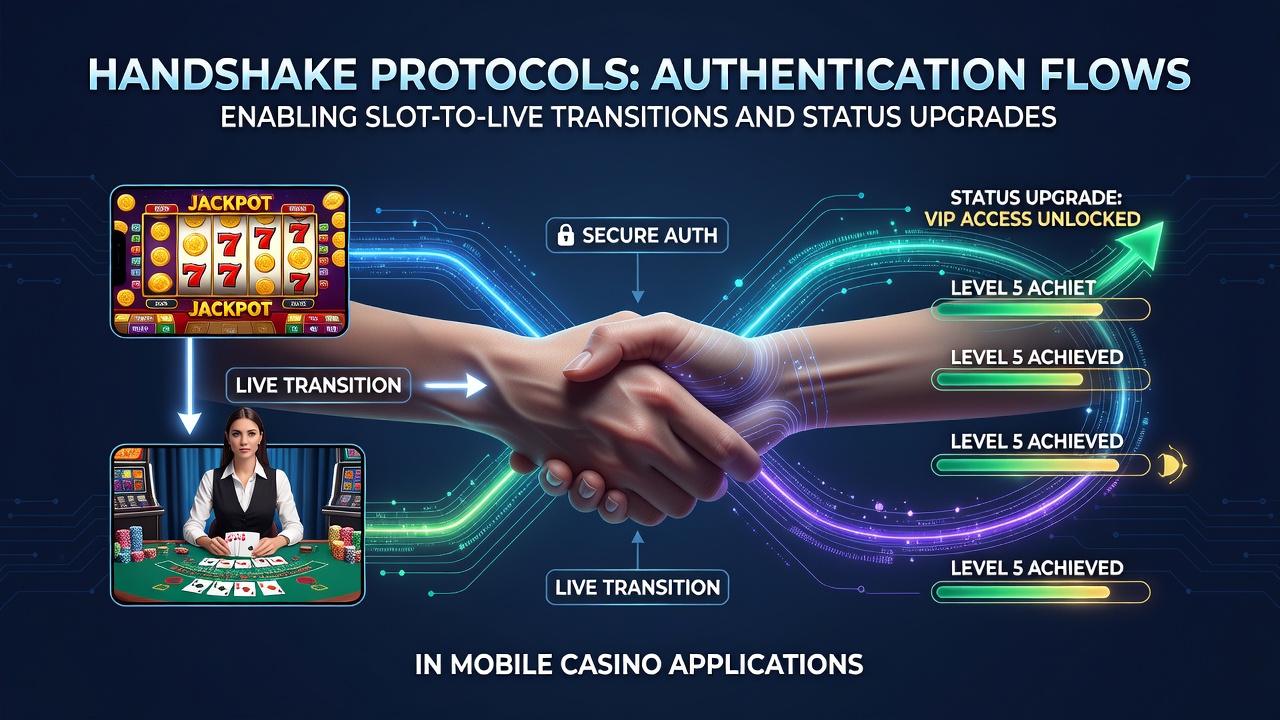
Authentication handshake protocols form the backbone of secure session management in mobile casino applications, allowing users to move between automated slot sessions and live dealer tables without repeated logins while supporting real-time status upgrades. These protocols establish encrypted channels through a series of message exchanges that verify identity, negotiate encryption keys, and confirm device integrity before granting access to new game modes or tiered benefits.
Developers implement variations of TLS 1.3 handshakes alongside custom application-layer tokens to handle the specific demands of casino environments. The process begins when a player initiates a transition request from within the slot interface, triggering the client to send a hello message that includes supported cipher suites, device certificates, and a session identifier tied to the current account state. Servers respond with selected parameters, their own certificates, and a verification request that checks for any pending loyalty points or bonus triggers.
Core Components of the Handshake Sequence
Key exchange steps rely on elliptic curve Diffie-Hellman methods to generate shared secrets that encrypt subsequent communications. Once both sides confirm mutual authentication, the system evaluates eligibility for live table access or rank elevation by querying backend databases for transaction history and play volume. Data shows that successful handshakes complete in under 300 milliseconds on average across major networks, according to performance metrics tracked by the Nevada Gaming Control Board.
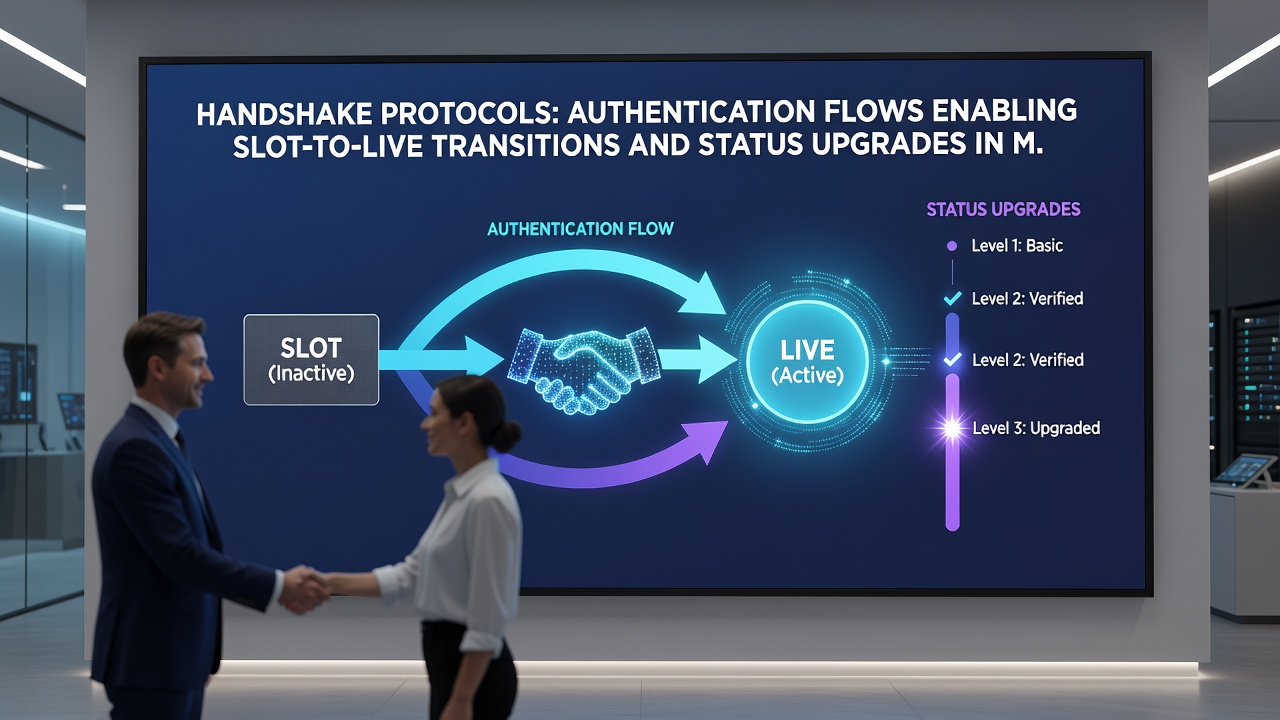
Status upgrades integrate directly into this flow when accumulated activity meets predefined thresholds. The protocol appends a metadata field during the final confirmation stage that signals the backend to adjust player tiers, unlock new payment options, or grant entry to exclusive live streams. Observers note that this embedded approach reduces separate API calls and maintains a continuous session record across game formats.
Device and Network Considerations in November 2026
November 2026 brought wider adoption of 5G standalone networks in several jurisdictions, which altered latency patterns during authentication sequences. Applications now detect network type at the start of each handshake and adjust timeout values accordingly to prevent dropped connections during slot-to-live switches. Research from the Australian Institute of Criminology indicates that optimized protocols have lowered session interruption rates by measurable margins in regulated markets.
Biometric elements often supplement traditional token exchanges on newer handsets. Fingerprint or facial recognition data gets hashed and compared against stored values without transmitting raw biometrics, adding a layer that supports seamless upgrades when players reach higher status levels. Those who have studied these implementations report that the added verification step occurs within the existing handshake window rather than extending overall duration.
Integration with Payment and Loyalty Systems
Payment channel selection ties into the authentication process when status upgrades unlock faster withdrawal paths or higher limits. During the handshake, the server checks whether the current session qualifies for instant settlement options and includes those permissions in the final response packet. This method ensures that transitions to live tables coincide with updated financial parameters without requiring players to navigate separate menus.
Industry reports from the European Gaming and Betting Association highlight how standardized handshake extensions now support regional compliance requirements across multiple jurisdictions. Applications transmit jurisdiction-specific flags early in the sequence, allowing servers to apply appropriate rules for game access and tier progression before the encrypted channel fully activates.
Security Measures and Error Handling
Failed handshake attempts trigger immediate session termination and logging for review by compliance teams. Common causes include mismatched certificates, outdated client versions, or detected proxy usage that violates platform policies. The protocol includes retry logic with exponential backoff to balance security against user convenience during peak hours.
Regular audits conducted by independent testing labs verify that these flows resist common attack vectors such as replay attempts or man-in-the-middle interference. Findings from such evaluations feed into protocol updates released quarterly, maintaining alignment with evolving cryptographic standards.
Conclusion
Authentication handshake protocols continue to evolve as mobile casino platforms expand their live and automated offerings. The integration of game transitions with status upgrades through these sequences provides a unified experience that meets both operational and regulatory demands. Ongoing refinements in key exchange efficiency and biometric support reflect the sector's response to changing network conditions and player expectations across different regions.